EN DE PL
Object

Cult Mask Of The Ngui Secret Society

Bulu–Fong mask with gorilla skull, mysterious, unique

Discover the secret of Ngui/Ngi/Ngil Society!

Origin: Cameroon
Tribe: Bulu–Fong
Material: Wood, Gorilla Skull, Glass Beads, Cowries, Jequirity Beans, Rattan
Dimension (WxHxD): 26 x 52 x 52 cm
Gorilla Mask Ngui, Ngi, Ngil Secret Society 1
▲ Click Slide Show
Gorilla Mask Ngui, Ngi, Ngil Secret Society 2
Gorilla Mask Ngui, Ngi, Ngil Secret Society 3
Gorilla Mask Ngui, Ngi, Ngil Secret Society 4
Gorilla Mask Ngui, Ngi, Ngil Secret Society 5
Gorilla Mask Ngui, Ngi, Ngil Secret Society 6
Gorilla Mask Ngui, Ngi, Ngil Secret Society 7
Gorilla Mask Ngui, Ngi, Ngil Secret Society 8

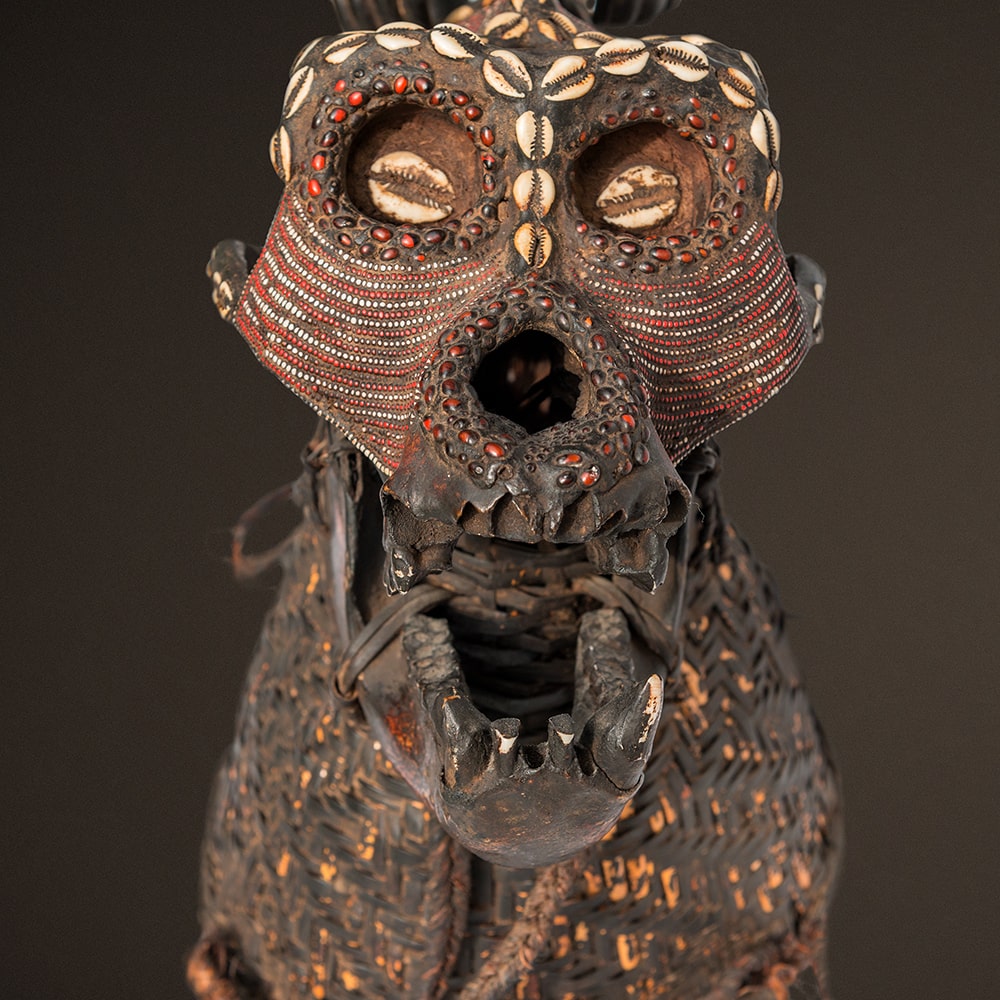
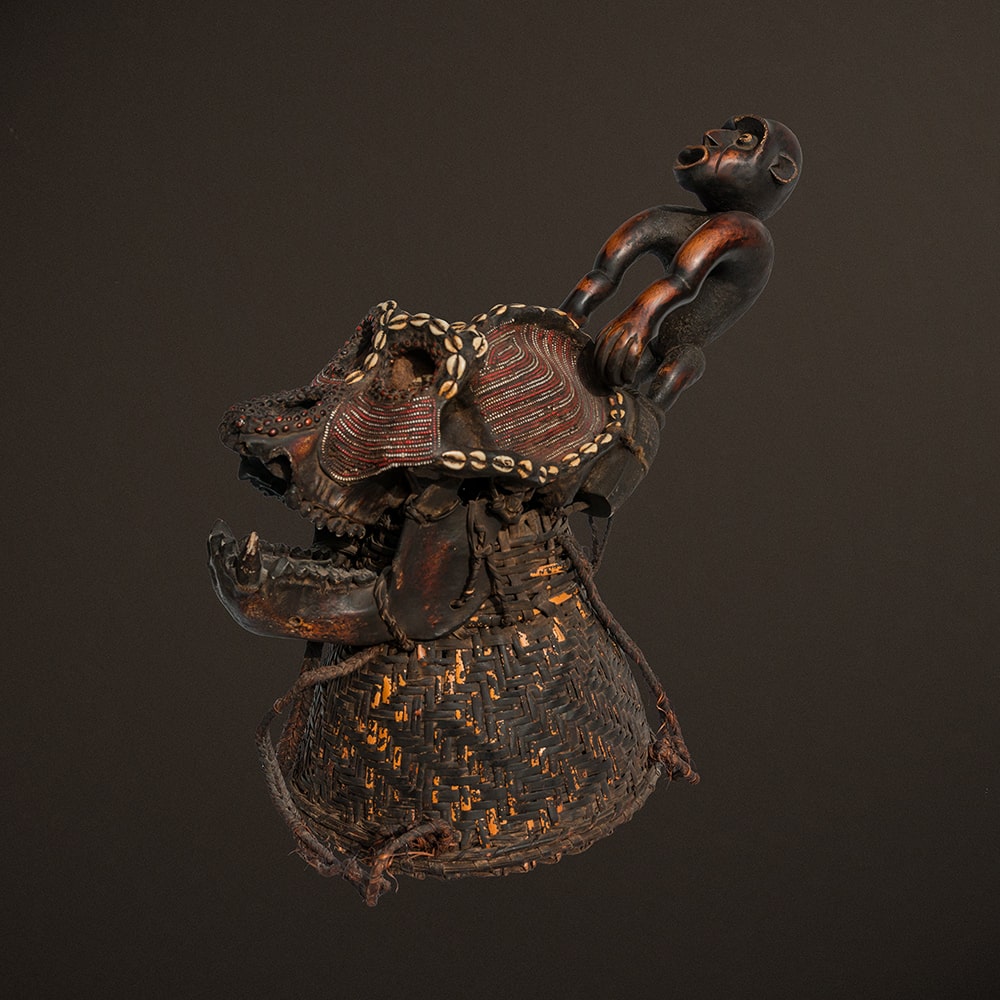
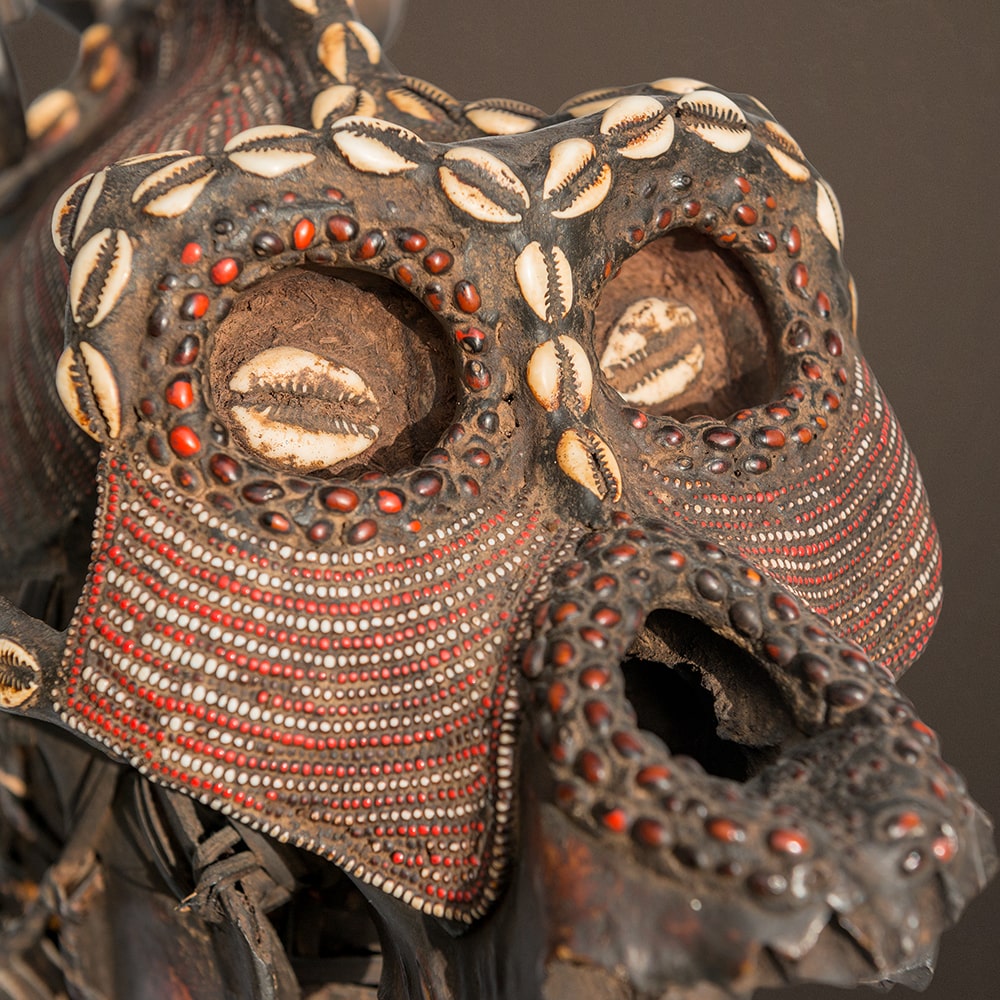
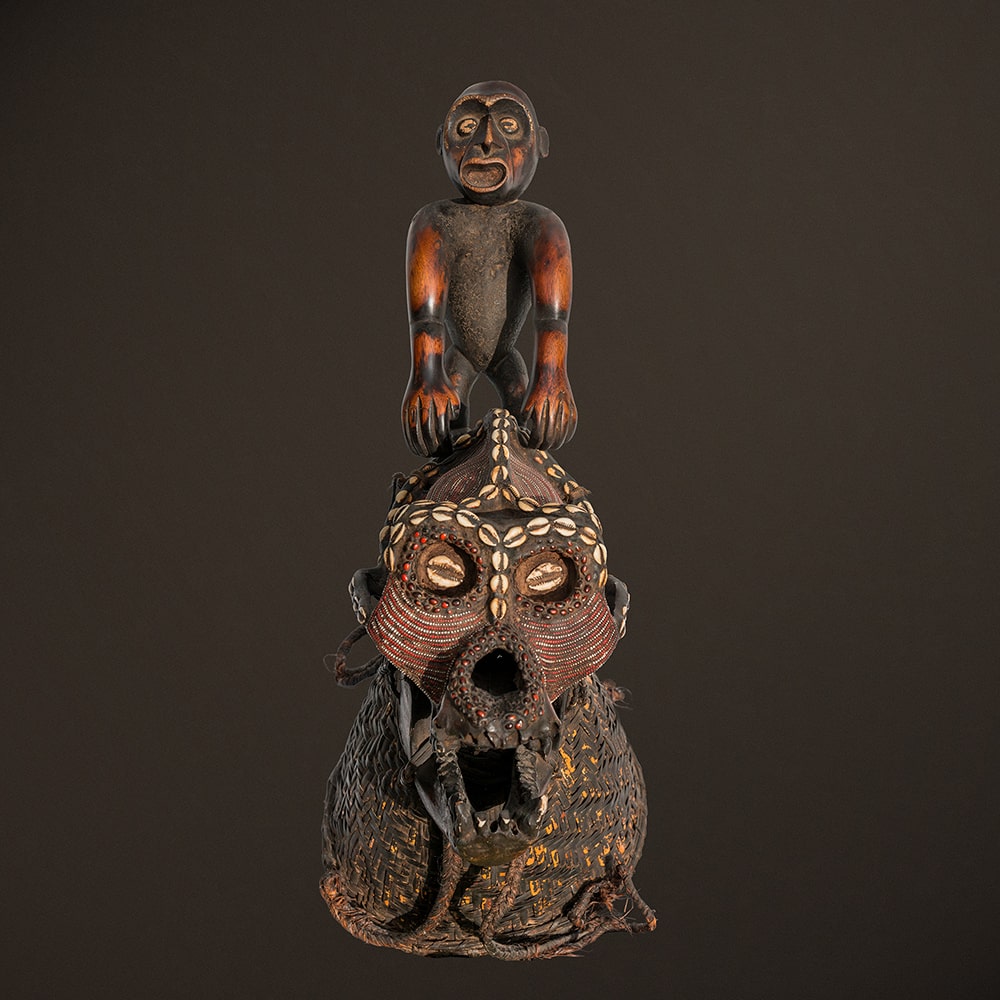
The mask pictured above formed part of the rituals of the Ngui Secret Society. Ngui (also known as Ngil or Ngi) represents the cult of purifying fire and embodies the power of fire itself—symbolized by the gorilla. In the Fang language, “Ngui“ also means gorilla.

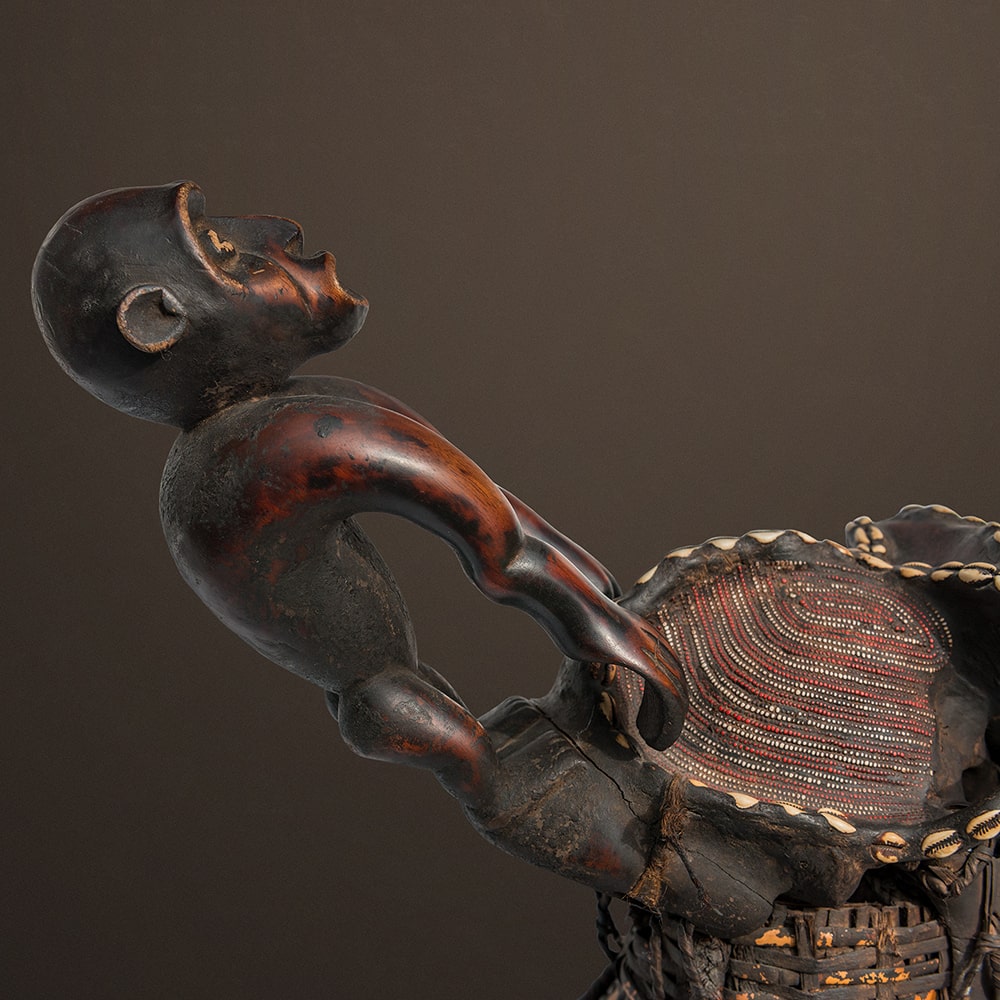
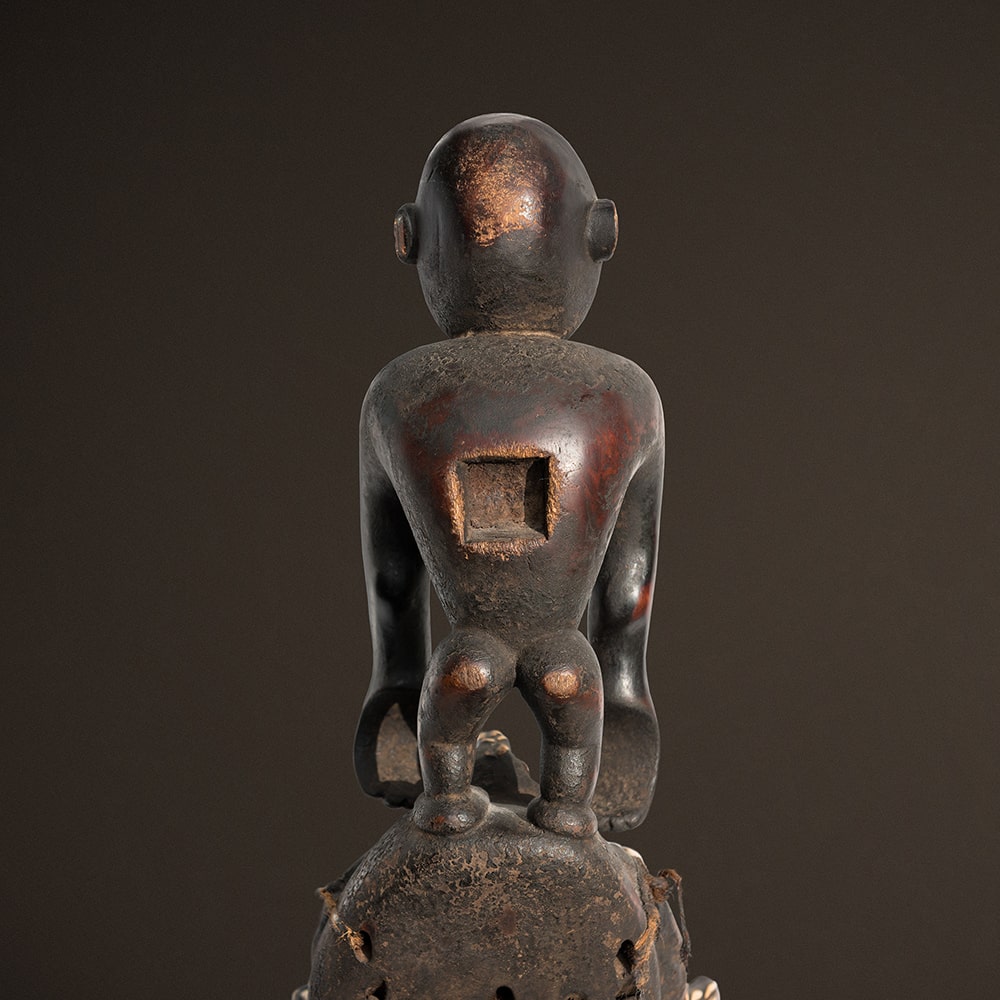
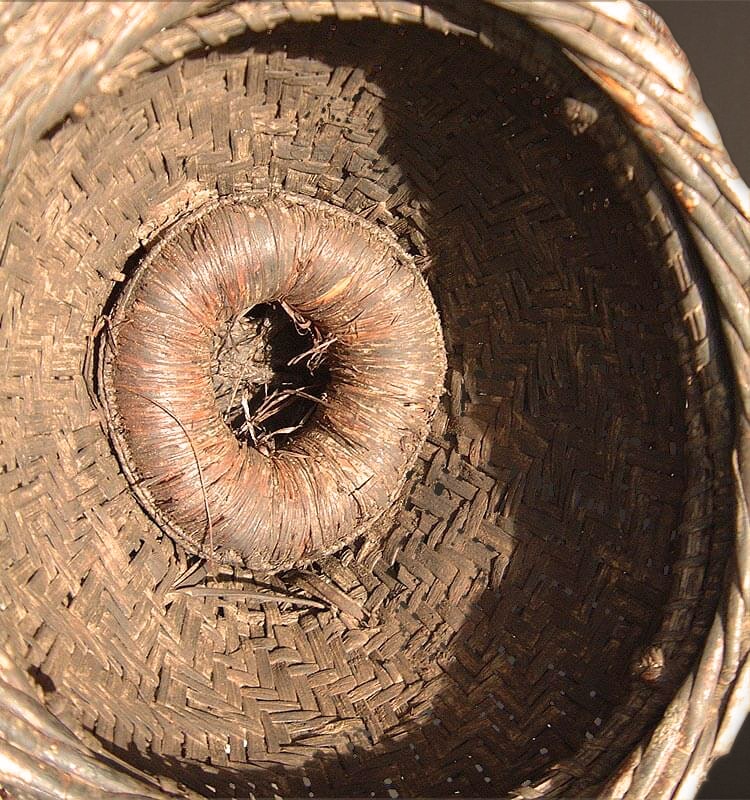
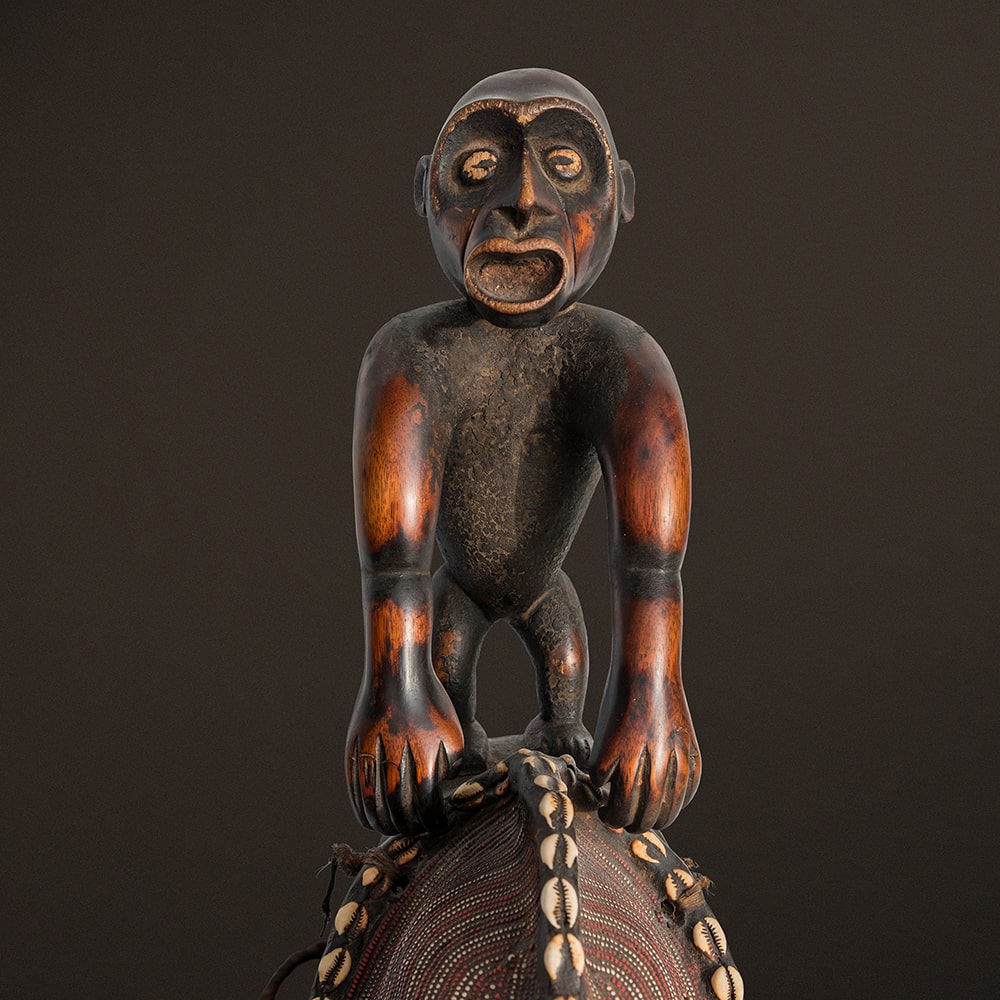
The gorilla skull is mounted on a rattan basket and decorated with glass beads, jequirity beans, and cowrie shells. The eye sockets are covered with camwood shavings, each adorned with a large cowrie shell. A masterfully carved monkey figure is attached to the back of the skull, its mouth opening likewise sealed with camwood. On the figure's back is a square, hollowed cavity, also lined with camwood shavings, which was presumably filled with ritual substances during ceremonies. Inside the basket, a grass padding has been fitted to ensure the mask could be worn comfortably. The figure, along with parts of the skull and the basket, is heavily encrusted with a black-brown sacrificial patina (blood, etc.).

Such partially and richly adorned helmet masks remain relatively little known and are considered rare individual pieces. The use of authentic skulls—exclusively by the Bulu–Fong—makes them particularly exceptional rarities.

Facts

The Ngui/Ngil/Ngi Secret Society

Gorilla Skull Cult Mask Of The Ngui/Ngil/Ngi Secret Society

The Bulu, sometimes spelled Boulou, are one of several related ethnic groups living in the forested south–central region of Cameroon, mainland Equatorial Guinea, and northern Gabon. Collectively, these peoples are referred to as the Fang. The term ”Bulu” is a loosely defined designation for one of the three major Fang subgroups, with the Fong forming one of the Bulu tribes.

The Ngui Secret Society (also known as the Ngil or Ngi Secret Society) is often called the Gorilla Society because its members wore gorilla masks during ceremonial rituals. Only the Fong used masks incorporating a real skull, as the gorilla was revered by them as a sacred animal and deity of fire. Other Fang groups employed stylized wooden masks in the ceremonies of the Gorilla Society, such as the famous white Ngil mask of the Fang: WIKIPEDIA or LÜBECK MUSEUMS.

The Ngui Secret Society likely operated in secrecy for many centuries. As a guardian of order and morality, it intervened in social customs and key aspects of community life, punished wrongdoers, and offered protection against witchcraft and malevolent spirits. Its members sometimes wielded more authority than local chiefs or even kings. It is easy to imagine that such a secret organization, operating under the symbol of the ”Sacred Gorilla,” was viewed as a threat by colonial powers and consequently suppressed. In 1910, the French colonial administration officially outlawed the Ngui Secret Society and its practices.

Between 1907 and 1909, the German ethnologist Günther Tessmann conducted an expedition to southern Cameroon and Equatorial Guinea on behalf of the Lübeck Ethnological Museum to study the Pangwe people (now known as Fang). His 1913 expedition report provides a comprehensive account of Pangwe/Fang culture and is regarded as Tessmann's most important work, including the only and final description of the Ngui Society. In 1910, Tessmann attempted to deepen his understanding of the Gorilla Secret Society by searching the Cameroonian rainforest once more, but without success. Following this, all knowledge of the Society disappeared, and the cult was considered extinct.

However, the absence of evidence does not necessarily imply nonexistence—especially when secrecy is involved. A striking example is the Ngui Secret Society, which was rediscovered as a fully intact and functioning cult a century later.

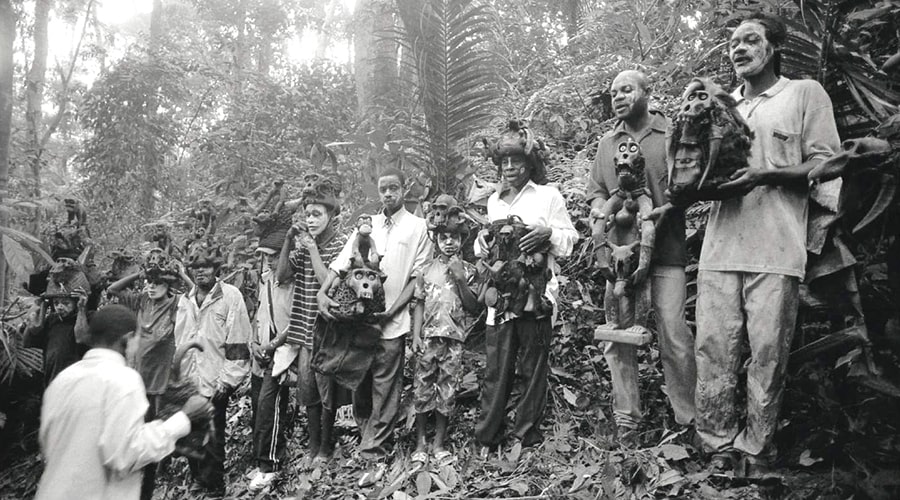
In 2008, the ethnographer and photographer Henning Christoph located one of these Secret Societies in the forests of southwestern Cameroon. In his diary, Christoph wrote: ”From an ethnological perspective, I stumbled upon a sensation. As the first researcher, I was able to witness and photograph a ceremony that had been believed extinct for 100 years and had never before been documented. Thus, I was able to create the only evidence that this Secret Society both existed and still exists.”

As Tessmann had earlier described, the rediscovered Ngui Society continues to intervene in the lives of the Fong, sometimes protectively but most often punitively, and is regarded as a feared guardian of moral conduct and overseer of divine law. Its primary role, however, remains the fight against witchcraft and harmful spells. Rituals are conducted both privately among Society members and publicly, though during public ceremonies the specific roles of participants are rarely known. The rediscovered Ngui Secret Society of the Bulu–Fong is active only in a small region encompassing roughly 30 villages.
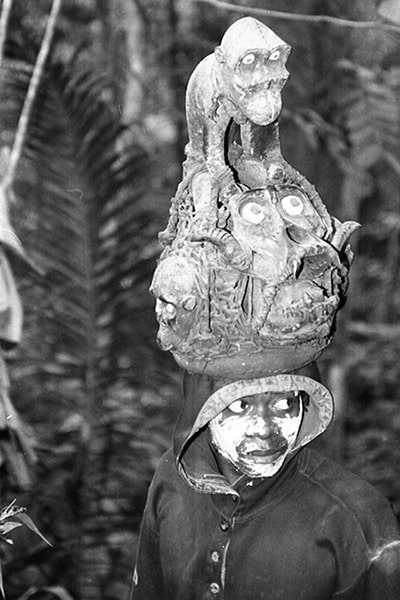
Ngui Secret Society member with a cult mask ► Source: www.soul-of-africa.com/en/exhibitions/kamerun.html, © Henning Christoph
Ngui Secret Society member with a cult mask
Source: www.soul–of–africa.com/en/exhibitions/kamerun.html
© Henning Christoph
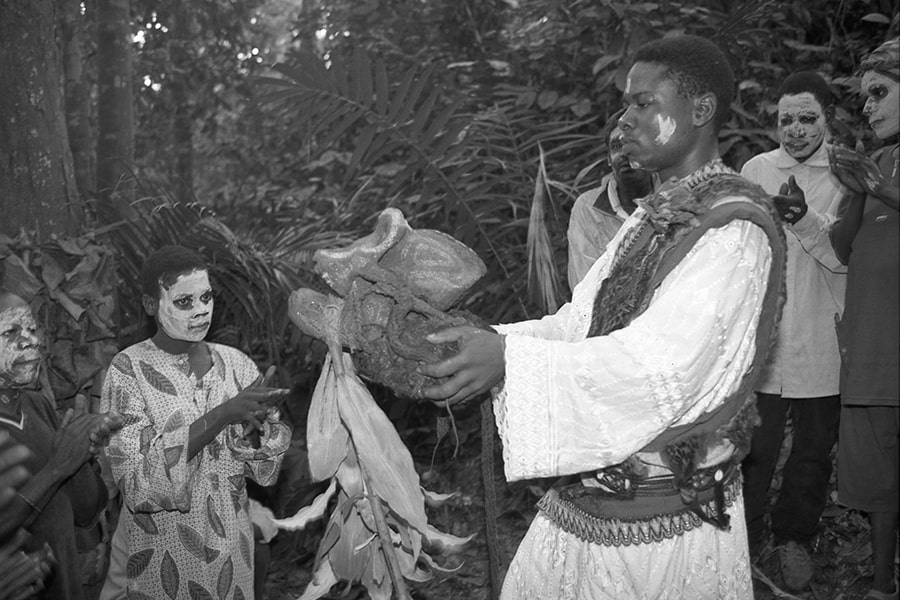
The Bulu-Fong medicine man during a ritual ► Source: www.soul-of-africa.com/en/exhibitions/kamerun.html, © Henning Christoph
The Bulu–Fong medicine man during a ritual
Source: www.soul–of–africa.com/en/exhibitions/kamerun.html
© Henning Christoph
The Ngui Secret Society members in rank and file ► Source: Photo from the book ”Spiritualités africaines”, © Henning Christoph
The Ngui Secret Society members in rank and file
Source: Photo from the book ”Spiritualités africaines”
© Henning Christoph
Dating

The Ngui/Ngil/Ngi Gorilla Cult Mask

African Ngi–Mask

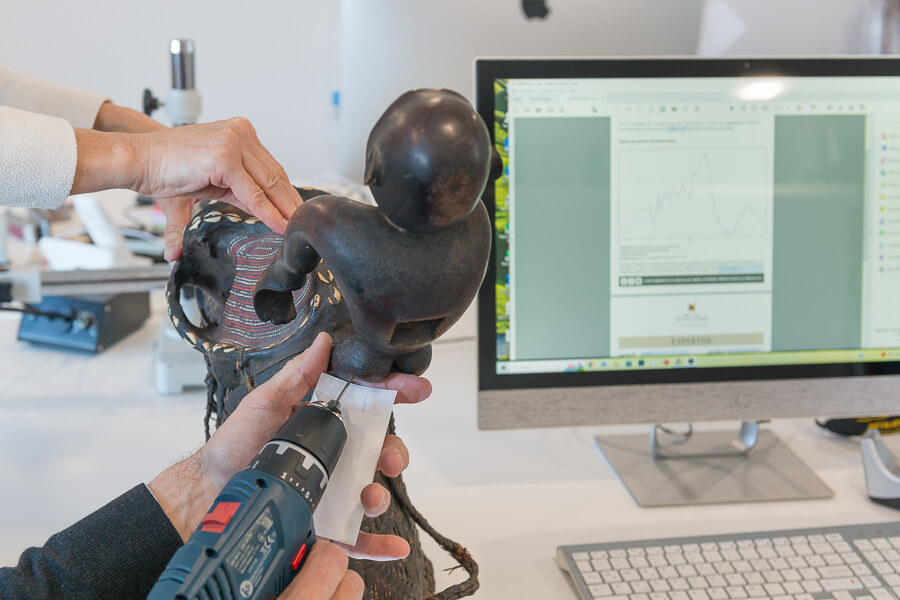
The age of the wood used for this mask was determined through scientific analysis and dating using infrared spectroscopy conducted at the laboratory of the MUSEO d'ARTE E SCIENZA (Museum of Art and Science) in Milan. Two small sampling holes were drilled into the monkey figure and expertly sealed afterwards.

The results indicated that the object dates back to around 1970, suggesting that the Ngui Secret Society was never truly extinct and had been active covertly for decades.

Sampling
Sampling
Analogy

Ngui/Ngil/Ngi Skull Mask, Bulu, Cameroon, Africa

Cult Mask Of The Ngui Secret Society Bulu–Fong, Cameroon, Africa

Similar exhibits to the mask presented here can be found in the Henning Christoph Collection at the SOUL OF AFRICA Museum in Essen. Images of corresponding masks are also featured in the publications ”African Spiritualities” and ”Secrets of African Rituals” by Henning Christoph, Markus Matzel, and Philipp Schiemann.

The cult objects of the Bulu–Fong have never before been published in books; therefore, these works offer a rare and insightful glimpse into comparable artifacts.

Due to copyright restrictions, I am unable to publicly display photographs from the Henning Christoph Collection. If you are interested, please feel free to send me an email inquiry.